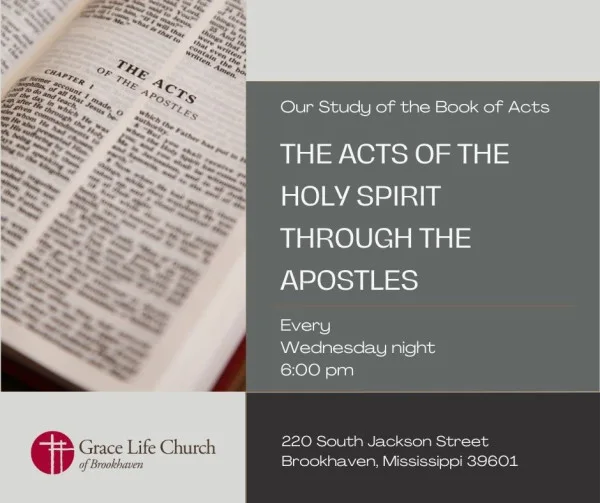
The Acts of the Holy Spirit through the Apostles
Stephen Arrested - God's Servant with the Face of an Angel

Acts 6
Sermon Study
Acts 6:8-15 shows Stephen serving faithfully, speaking with Spirit-given wisdom, and standing before hostile leaders with the face of an angel. The sermon highlights a servant whose character and courage prepared him for greater usefulness in God's purposes.
Primary Scripture
- Acts 6
Mentioned Scripture
- Acts 15
- Galatians 2
- Ephesians 5
- John 13
- Hebrews 10
- Leviticus 24
- Mark 26
- Mark 14
Transcript
Please take your Bible and turn to Acts chapter 6. Acts chapter 6, we will be in verses 8 to 15. Acts chapter 6 verses 8 to 15. Now, we're moving along in our study of the book of Acts. You might think, "Pastor, I'm not sure when we'll ever get through." Well, we'll just take our time, as we always do, but we are moving along and we have been seeing the great and the wonderful acts or actions of the apostles and the church at Jerusalem, because we know there was the entire church that was behind the apostles here.
And all of their great, wonderful actions were taking place because of the wonderful actions and workings of the Holy Spirit of God in and through them. I have said this before. The title of the series is all about the acts or the actions of the Holy Spirit of God in these believers. But at this point in time in the study that we're in, at this point in time in the book, we're on the verge of some big change. Actually, there are two big changes coming up, one sooner, one later. In all that we have been studying here in chapter 1 to chapter 6, we have been seeing the activity of the church only in Jerusalem, only there in Jerusalem.
It seems like almost all of Jerusalem has been taken over by the church. The membership of the church, some scholars say, even went into the thousands, even 20,000. In Acts chapter 5, verse 28, the Jewish religious leaders said that Jerusalem was filled with the preaching of the apostles. And we will soon see when the third round of persecution breaks out against the church at the Stoning of Stephen, the church is scattered, the church is pushed, the church is catapulted out of Jerusalem. Look at Acts 1.8, that verse says, "And Saul approved of his execution." That was the execution of Stephen.
And there arose on that day a great persecution against the church in Jerusalem. And they, that's the church, that's the believers, were all scattered throughout the regions of Judea and Samaria except the apostles. So we are on the verge of big change. When we get to chapter 8, we will see the work of the church go out of Jerusalem, into Samaria, and into all of these Gentile lands. And they were not just driven out, they were not just persecuted out. We understand that this was God's plan, so they were sent out. But here in chapter 6, we're starting to see a different change. And we will see that this is a big change as well.
Up to chapter 6, the apostle Peter has been the predominant leader in the church along with the other apostles. But we will see that after Paul's conversion later on in chapter 9, the apostle Paul becomes this predominant leader. It's almost as if Peter fades into the background, although we know he was a major figure until his death, we will see his importance in Acts 15 at the great Jerusalem Council, which was a very, very serious time in the life of the church.
But in the middle of this big shift, from the apostle Peter being the predominant figure in the book, to the apostle Paul becoming this predominant figure in the book, we have a couple of men who are kind of a bridge between the two, Stephen and Philip. Stephen and Philip, mostly Stephen. So right here in chapter 6 and chapter 7, we are crossing over a threshold into a time where Stephen and then Philip are the main characters. This will serve as a transition to when Paul becomes the predominant figure and leader, really through the rest of the book.
Now, before we get into our verses, I wanna point out a few things about Stephen that we need to see if we're going to see the significance of this man. And I do this because if we are not careful, we can overlook Stephen for two reasons. First, because he has sandwiched in between these two towering figures, Peter and Paul. Peter and Paul obviously get all of the attention of the book, rightfully so, or most all of the attention. But second, because we can overlook Stephen because his life in his ministry was very short.
But notice how Stephen in his ministry was a very important, was very important in the evolution of the work of the gospel and the church from the Jews now in Jerusalem on into the Gentile lands. We have seen that the apostle Peter's ministry was mostly to the Jews and it remained that way throughout his life in ministry. Peter is commonly referred to as the apostle to the Jews. You've probably heard this. And we will see that the apostle Paul's ministry was mostly to the Gentiles. We will see this from chapter 9 on. That is why he is commonly referred to as the apostle to the Gentiles. You've probably heard that as well.
But look at how Stephen fits in. Stephen had a short, very powerful ministry to the Hellenistic Jews that we talked about last week, which served as kind of this bridge between Peter's ministry and Paul's. First, Stephen served meeting the physical needs in the church, which had a lot to do with the neglect of the Hellenistic widows. We saw that last week in verses one to seven. Second, God enabled him to perform great signs and wonders and to preach Christ powerfully. And we will see that this was specifically to the Hellenistic Jews at first.
Of course, his ministry went beyond those Hellenistic Jews, but right here, we will see that God used him specifically for the Hellenists. Remember, he was of Greek origin. We saw that last week. Now, I will revisit some more general observations about Stephen next week. But tonight, we will see Stephen transition from physical ministry or physical work in the life of the church to spiritual ministry, to evangelistic preaching ministry in the life and work of the church. And many of you know this, we will see his arrest. And in all of these events, we're gonna see quite a lot, not just about the events, but about the man.
I really wanna focus on the man, Stephen. So let's look at our verses, verses eight to 15. We were introduced to Stephen last week, verse eight. When Stephen, full of grace and power, was doing great wonders and signs among the people. Then some of those who belonged to the synagogue of the freed men, as it was called, and of the serenians and of the Alexandrians, and of those in Cilicia, in Asia, they rose up and they disputed or argued or debated with Stephen. But they could not withstand the wisdom and the spirit with which he was speaking.
Verse 11, then they secretly instigated men who said, we have heard him speak blasphemous words against Moses and God. And they stirred up the people and the elders and the scribes and they came upon him and they seized him and brought him before the council. Some translations may note the Sanhedrin. And they set up false witnesses who said, this man never ceases to speak words against this holy place and the law. For we heard him say that this Jesus of Nazareth will destroy this place talking of the temple and will change the customs of Moses that he delivered to us.
And gazing in him, this was the Sanhedrin, the council, gazing at Stephen, all who sat in the council saw that his face was like the face of an angel. Now in our approach or division of these verses, we'll look at quite a few observations and we will go back and forth between Stephen's spiritual character, Stephen's spiritual power and the spiritual opposition of the Jews. So let's get started. Number one, I want us to look at Stephen's spiritual character. Stephen's spiritual character. Well, we see this in the beginning of verse eight, but we have to go back to verse nine, excuse me. We have to go back to verse five from last week's verses.
But last week, Luke began to show us who Stephen was. And when we look at how Luke describes Stephen in verse five and here in verse eight, we see quite a lot about the man. We see quite a lot about Stephen's character. But before we get started, we need to see the meaning of the word character. And I do this in two ways. Webster defines character as the attributes or features that make up and distinguish an individual. Let me repeat that. Webster defines character as the attributes or features that make up and distinguish an individual. Well, I have heard character defined another way.
I don't know where I picked this up years ago, but I've said it many times throughout the years. But reputation is what people say about you, but character is what God says about you. I'll repeat that. Reputation is what people say about you or what people say about us, but character is what God says about you or what God says about us. So right here, we see the attributes and the features that made up our distinguished Stephen according to God, not man, according to God and not man. Now, when we examine Stephen's character that was given by God here, we see forward distinguishing character traits.
Verse five, they chose Stephen to wait on tables, remember, a man full of faith and of the Holy Spirit. Verse eight, and Stephen full of grace and power. Now here we see that Stephen was characterized by four things, faith, the Holy Spirit, grace, and power. So first Luke shows us that Stephen was full of faith. Verse five, now to see what this means, we have to understand this word full. In this word full, it means to be filled with, it means to be controlled by, it means to be guided by. But notice what he was filled or controlled by. The text says the faith. Now, yes, this was his personal faith in Christ, but it was more.
He was filled with and controlled by the faith. And in his sermon, starting in chapter seven, Stephen explains the content of the faith that was controlling him. Simply he was filled with and he was controlled by his personal experiential faith in Christ. He could say with Paul, I have been crucified with Christ. It is no longer I who live, but Christ who lives in me. In the life I now live in the flesh, I live by faith in the Son of God, who loved me and gave himself up for me. I'm quoting Galatians 2.20. And he was filled with and controlled by the Spirit. Simply, or excuse me, he was controlled by the faith.
Simply the faith that he preached was that Christ Jesus was a promised Messiah of God. Jesus was and is the fulfillment of all that was promised throughout all of the Old Testament scriptures. Simply the faith he preached was the faith as seen in the entirety of the scriptures. Of course, for Philip, he didn't have all of those scriptures because the New Testament canon had not been completed. Now, there is a lesson here, all right? And I'll move quickly. If we observe people in life, we will see if they stand in the faith or if they stand in a faith.
We even know that John MacArthur has died and history is telling us that he stood well and he was filled with and his life was controlled by the faith, the faith that we see in the scriptures. But you know every now and then with some of these celebrity quote unquote Christians, we will see them deviate. They will move away from the faith. And what we'll see is they will become assimilated to a worldly type of faith. I'll mention a name or two here. Sadly, Chip and Joanna Gaines have seemed to venture away from the faith, hopefully they will repent and come back to the faith. They ventured off into a worldly form of Christianity.
But second, Stephen was full of the spirit, verse five says. Next Luke tells us that Stephen was filled with, he was controlled by, he was guided by the Holy Spirit and that is none other than the Holy Spirit of God. Of course, we know that at Pentecost, the promised person of the Holy Spirit was given. The spirit came down as promised, upon and in all of the believers who were waiting on Jesus as he commanded them. But we also know that God's expectation and standard for the Christian life and Christian living is that believers are to be filled with, controlled by, guided by the Spirit of God all the time. We learn that in the Apostle Paul.
Ephesians 5, 18 says, "And do not get drunk with wine, "for that is debauchery, but be filled with, "guided by, controlled by all the time the Spirit." And here we see God's expectation, his standard for his people, that they are to be filled with, they are to be controlled by, guided by the Holy Spirit of God. And here Luke tells us that that was the case with Stephen. He was filled with, he was controlled by, he was guided by the Holy Spirit. And then third, Stephen was full of grace. We see this in verse eight. Next Luke tells us that Stephen was filled with, controlled by, guided by grace.
And this being filled with grace was a result of being filled with the Holy Spirit and faith. You see it all builds together. Simply because Stephen was filled with and continued to be filled with the Spirit and the faith and his personal faith, grace was given to him. And grace was made known in him and through him. And evidence of Stephen being filled with and controlled by grace and the grace of God in him is how he reacted when he was stoned. He was exactly like Jesus. He, filled with the grace of God, graced them by praying that God would forgive them.
And Luke Church, one of the marks of living the Spirit filled life is that you were saturated with grace. You see that? One of the marks, one of the defining marks of living the Spirit filled life is that you were saturated with grace. Grace is infused in you and it comes out of you. Show me a Christian that is mean, short, short tempered, arrogant, judgmental, snippy. Show me a Christian that's always scrutinizing other believers. You show me a Christian like that and I'll show you one who is not filled with grace. But you show me an older, more seasoned believer who's walked with God for a while and they really are filled with the Spirit.
They will be filled with grace and they'll say stuff like this. I see that brother over there and he's acting just like I do. I see that sister, she's struggling without sin. She's struggling without sin and I can't judge her because I've struggled with that sin too. It's grace. And they'll be like this too. When someone wrongs them, when someone hurts them, they won't be quick to retaliate. They'll be very slow to speak because they will be filled with grace. They will be filled with grace and that they will forgive them even when others will not repent as they should. But let me continue. Fourth, he was full of power.
We see that in verse eight. Last Luke tells us that Stephen was filled with, controlled by God and by power. And this power is simple. It means strength or ability. It means power, strength and ability to do. But what? What did Stephen have the ability, the power to do? He had the power to live the Holy Spirit-filled life. You see? He had the power to live the Spirit-filled life and he had the power to live the Holy Spirit-controlled life throughout even difficult circumstances. And because he was controlled by the Spirit and he had Holy Spirit power to do God's work, well, God really used him in a unique way.
He had power to serve in physical matters in the church. Remember, he was a deacon in prototype, I believe, before. He had power to perform apostolic miracles we're gonna see. He had power to defend the faith we will see. He had power to preach Christ we will see. He had power to go toe to toe with the religious leaders. We're gonna see that. He had power to be the first martyr for the faith. We're gonna see that. He had the power to forgive those who stoned him. Simply, Stephen had Holy Spirit power to perform Christian work that God had for him. Let me repeat that.
Stephen had Holy Spirit to perform the great Christian work that God for him, but remember, he had the power to perform this Christian work because he had the power to live the Christian life, the Spirit-filled life to begin with. Now, there's a lesson here, folks. We will never be filled with the Spirit to perform Christian works unless we're filled with the Spirit to live the Christian life. We have to live the Christian life day in and day out. We have to live the Spirit-filled life when no one's watching now before we can ever have Holy Spirit power to do the work that God has for us.
So, look at what Luke tells us about Stephen's spiritual character or the spiritual features and attributes that made up this man, that defined this man, that really determined who he was, which determined how he lived and what he did. You see that? Who he was determined how he lived and what he did. He was a man filled with and controlled by the faith, Spirit of God, he was filled with and controlled by God's grace and God's power. And what we need to take from Stephen in his character right here is this. Who we are determines our ability to do God's work.
Who we are determines our ability to do God's work and to accomplish the specific works that God has for us. Now, let me explain something. You can be filled with sin and filled with flesh. You can be a fake and a fraud. And you can pretend to be accomplishing God's work and look like you are for a while, but in the end it's revealed. In the end it's revealed. So, Stephen's spiritual character. Number two, Luke shows us Stephen's spiritual power. Luke shows us Stephen's spiritual power in the second part of the verse. Now, we've already seen that Stephen was filled with and controlled by the power of God.
And here we will see the specific one thing he was empowered to do. Look at verse eight. In Stephen, full of grace, you could say, full of power, was doing great wonders and signs among the people. Now, there are two observations I wanna make here. These observations are not very specific. Notice that Stephen goes from waiting on tables to meet and meeting physical needs in the church to performing great signs and wonders and miracles. And as we will see, he also had the power to preach powerfully. But notice what this tells us. God's gifts and giftedness to Stephen was not just serving in the physical.
His gifts and his calling and his giftedness from God was in spiritual works as well. Notice that Stephen was performing great miracles like we've seen before with Peter and the apostles. But look at what this tells us. I call them apostolic miracles. Apostolic miracles were not just for the apostles. And we need to take the time to see who all performed miracles like this. Now, I have a list and I really got it from John MacArthur. It's too good to pass over. This will help you. Within the New Testament church, there were only a select few who performed great miracles like this.
I call them apostolic miracles, although it was more than the apostles. First, the apostles performed great miracles and signs. We've already seen that. Then Stephen and Philip, we see it right here with Stephen and we will see it with Philip in Acts eight. And then Barnabas in Acts 15, 12. Now, I've said this before. The apostles and certain few who were chosen of God and close to the apostles were the ones that performed great signs and wonders that are seen all throughout the book. So Stephen possessed great spiritual power. And in this case, it was to perform signs and wonders. Now for us, we must remember why those gifts were given.
Those signs and wonders were meant to draw the attention of the people. Those things were meant to point them to the message of the gospel and to point them to the message of God's word that was preached. And those miracles were meant to validate the ones that were preaching. But what about us? What does God use in our day to attract the lost, to point the lost to the gospel and to point the lost to the truth of God's word and to validate us as God's people? You ever thought about that? Jesus tells us. John 13, 34 to 35, I read this verse Sunday morning.
Jesus said, "A new commandment I give you that you love one another." He's talking to the disciples. "Just as I have loved you, you also are to love one another." In other words, he says, "You are to love one another as I have loved you." What a great example. Verse 35, "By this all people." Who are all people? All people. I will elaborate. "By this your children will know. By this your mother and father will know. By this your extended family will know. By this your coworkers will know. By this your neighbors will know.
By this all people will know that you are my disciples if you have love for one another." Simply the lost world will know that we are valid and true as God's people and that the message we preach is true by how we love one another. I think back to what we studied Sunday morning and our responsibilities in Christ and the new life. We should be a people who have the power to live out what we see in Hebrews 10, 22 to 25. We should have the power to draw near to God, to hold fast to the faith.
We should have the power to consider one another, to contemplate one another, to look around at one another so as to provoke one another, to love and to good works and just to encourage one another. We should have the power to be able to do these things and when we do these things as the church, the lost world will take notice. So Stephen's spiritual power. Number three, Luke shows us spiritual opposition. The spiritual opposition from the Hellenists and it will move on from the Hellenists from verse nine. Now right here I will not spend as much time other than pointing out who was opposing Stephen.
I will point out a little of what they've done. But verse nine, then some of those who belonged to the synagogue of the freedmen as it was called and of the serenians and of the Alexandrians and those from Cilicia and Asia, they rose up and they disputed with Stephen. Now notice that opposition came from the synagogues not the temple. That is because the synagogues were different than the temple. The synagogues were places of worship outside of the temple. They were scattered all through the land and the synagogues were places of worship where the Jews would meet on the Sabbath for instruction from the law.
Now one thing to remember, when we get into our chapters after the church is scattered, we will see that when Paul went from city to city to preach the gospel, he first went to the synagogues because he first preached the gospel to the Jews. He knew he would find them assembling at the synagogues. But one thing we need to see here is this. Many times the synagogues were named after the Jews who met there. This was very practical. And this is what we see in verse nine. The synagogue of the freedmen was most likely a synagogue for Jews who had been freed from slavery from the Romans.
Cyrene was a city in Africa and it seems that Cyrenean Jews had settled in Jerusalem. Alexandria was a city in Egypt and it seems that Alexandrian Jews had settled in Jerusalem as well. Cilicia was a city in the southeastern province of Asia, minor, and it seems that Jews from Cilicia had settled in Jerusalem too. And Asia was a province in Asia minor and it seems that Jews from Asia had come to Jerusalem as well. Well, what is the point besides a quick rough geography lesson? Luke is pointing out the different groups of Jews who had settled in Jerusalem and it seems that they kind of had their own synagogues.
One of my historical sources, background sources described it like this. I'm really just reading a block that he, that I pulled from his material. He says, "Jerusalem had many synagogues, "including some of those mentioned here. "Archaeologists have found the dedication and description "from the synagogue of the freedmen. "Those descended from former Roman slaves, "though they considered a particular class "of Greco-Roman society from the first generation. "Judaism ranked them just below the proselytes. "Later sources attest to the synagogue of the Alexandrians "and that of the Cilicians.
"The capital city of Cilicia was Tarsus, Paul's hometown. "Other ancient cities with large "Jewish immigrant populations also had diverse synagogues." Now, what's my point? We see that different synagogues representing the different Hellenistic groups there in Jerusalem. Luke is just pointing out these groups of Jews. They had settled in Jerusalem. They had their own synagogues. And the ones he was pointing out here were Hellenistic. They were not the native Jews from the land of Palestine. And this is a group that Stephen was ministering to. They rose up against him. He performed great miracles and he preached.
And then number four, verse 10, more of Stephen's spiritual power. Number four, we see more of Stephen's spiritual power. Look at verse 10. But they, who was that? Those groups, those Hellenistic Jews, they could not withstand the wisdom and the spirit with which he was speaking. Now, I could have combined verse 10 with verse eight. So that we could have covered Stephen's power to perform miracles and wonders with what we see here. But I thought it's best to single out what we see in the two verses. In verse nine, we see that those Hellenistic Jews of those different groups, they came together, they disputed with Stephen.
The legacy standard Bible says that they rose up and they were arguing with Stephen, but a question. Verse nine tells us he performed great miracles. We've studied that. So what were they arguing or debating with Stephen about? Verse nine does not tell us, nor does verse 10. But it seems safe to assume that as he was performing great miracles, he was preaching Jesus as the promised Messiah. It is safe to assume that he was preaching Jesus, the death of Jesus, the resurrection and the ascension of Jesus, and the fact that Jesus was and is the promised Messiah of God.
We see the details of Stephen's preaching later on in chapter seven, when he went before the high priest and those other Jewish religious leaders. So it is safe to assume that he was preaching the very same thing that we see in chapter seven to these Hellenistic Jews. But notice that Luke mentions another side of Stephen's spiritual power. Look back at verse 10. But they could not withstand the wisdom and the spirit with which he was speaking. Look at what we see here. Stephen's spiritual power to preach Christ and to defend the faith. The Hellenistic Jews were unable to stand up against and to refute what he was preaching.
Stephen possessed a God-given wisdom and he was filled with the spirit of God. John MacArthur says that this phrase, the spirit with which he was speaking, probably does not refer to the Holy Spirit but to the energy, zeal, sincerity, and fervency with which he spoke. MacArthur goes on to say that Stephen possessed two things that are a requirement for effective public speaking and the ability to debate. Unarguable truth and potent delivery. That's what he had. He had the unarguable truth of the word of God and the gospel and a potent, I would say, Holy Spirit inspired delivery. And I do think he's right. Stephen possessed the truth of God.
He possessed the gospel. He knew all about Jesus as the Messiah. He was spirit-filled. He was given a measure of the spirit that God had for him to preach powerfully and to deliver the word of God powerfully. So simply Stephen had this spiritual power, this ability to preach with great potency. And notice how this applies to us. God has given us many people who can preach and teach God's word, the truth of God's word, with Holy Spirit empowered power. I'm thankful that when I'm out, God's given us men who can preach the word effectively.
Now, none of us can preach with the power that Stephen preached with, but God has given us the ability to week in and week out with spirit empowered ability to preach and teach God's word. But beyond that, we have men and women who can teach God's word in small groups. We have men and women who teach teenagers and children. What am I trying to show you? We have people from the pulpit to the classroom who know the truth, who take the truth, and teach the truth with spirit and with power. And look, we must not take these things for granted. We must pray for God's ability. We have the truth of God's word now.
We need God to help us to study God's word, yes. But we need Holy Spirit power to be able to teach his word and preach his word with Holy Spirit potency to change people's lives. So we see more in verse 10 of Stephen's spiritual power. Then number five, we see more spiritual opposition. We see more spiritual opposition. Verses 11 to 14. Then they secretly instigated men who said, we have heard him speak blasphemous words against Moses and God. And they start up the people and the elders and the scribes, notice it transitions to those Palestinian Jews.
And they came upon him and seized him and brought him before the council, that's the Sanhedra. And they set up false witnesses who said, this man never ceases to speak words against this holy place and the law. For we have heard him say that this Jesus of Nazareth will destroy this place, talk about the temple, and will change the customs that Moses delivered to us. Now what took place here is simple. The Hellenists could not refute Stephen. So they plotted and schemed against him.
But notice who this was, verse 11 says, they, which points back to verse nine, and the groups of Hellenistic Jews who came together when he was preaching the gospel and they debated him and tried to refute him. So this opposition with the Hellenistic Jews, we see it, but then we see these events escalate and we see that now it involves the high priests, the native Palestinian Jews describes the elders, really the whole bottle of wax. And notice that Luke tells us four things here, I'll be quick here. First, they secretly instigated others against Stephen.
Here we see the Hellenists secretly start up men who falsely accused Stephen of speaking blasphemy against Moses and God. Simply this is what was happening here. When Stephen preached that Jesus was the fulfillment of the law of Moses, they saw that as blasphemy, which is speaking sinfully against something or someone that God has declared to be holy and sacred. And when Stephen preached that it is safe to us, and when Stephen preached, it is safe to assume that he preached the deity of Jesus, therefore declaring that Jesus was God, and they certainly saw that as blasphemous.
So the point here is this, they secretly instigated others to believe and declare that Stephen was guilty of blasphemy. And according to Leviticus 24, blasphemy was a capital offense in Judaism. Second, they start up the people and the Palestinian Jews and their leaders. We see that in verse 12. Here we see that the Hellenists took things up a notch, they went from stirring up the people to stirring up the elders and the scribes. In other words, the Hellenistic Jews brought their case against Stephen to the native Palestinian Jews, all of the Jewish religious leaders, and they had the power to do something about it.
Third, they seized Peter, they seized Stephen and brought him before the Jewish council. Here we see that the scheming of the Hellenistic Jews paid off after they stirred up the people to accuse Stephen of blasphemy, and after they got the case before the Jewish leaders, the Jewish council of the Sanhedrin gave the authority to have Stephen arrested. And notice that the temperature of things change. In the legacy standard Bible, verse 12 says, and they came up to him and dragged him away and brought him before the Sanhedrin. This phrase drag him away, it means to seize by force, it means to seize, to take away with violence.
Now notice before I move on, look at how things changed. I said the temperature changed. In the previous or the second outbreak of persecution against the church, the Jewish authorities did not seize the apostles with violence like this because they feared the people. Chapter five, verse 26 tells us that. But here we see the temperature of the people and everything has changed. The Jewish leaders did not fear the crowds, so they did what they always wanted to do. They violently arrested Stephen. Fourth, they scrounced up false witnesses at his trial, verse 13, here we see what took place at this sketchy trial.
Well, that's what this was, a sketchy trial, a kangaroo court. Here they, the Hellenistic Jews, brought forth the false witnesses that they drummed up earlier. And what these false witnesses did at this sketchy trial was simple. Before the council, they repeated the false charges from earlier. They accused Stephen of speaking out against the temple, Moses and the law. And all of the things that they accused him of were blasphemy to the Jews. One commentator that I use sometimes, sometimes, F.F. Bruce, he gave a little good insight here. I'm quoting him.
He says, "They are called false witnesses, "but as those who brought similar testimony "against Jesus are called," in Mark 26 and Mark 14. In both cases, the falseness of their testimony consisted not in wholesome fabrication, but in subtle and deadly misrepresentations of the words that were spoken. What's F.F. Bruce saying? They didn't just bring a bucket full of lies, they took some of what Stephen said and they misconstrued it. So look at what we see here. Luke shows us the spiritual opposition of the Hellenistic Jews that became the Palestinian Jews, the Jewish ruling council, all of this against Stephen.
This went from the Hellenistic Jews not being able to refute Stephen and his preaching to their false accusations. They did not accuse Stephen of preaching wholesale lies. They misrepresented what he preached and they used those things to bring about a deadly end. And here it ended up, in here, it ended up in a kangaroo court. I called it a sketchy trial of false witnesses, false accusations, and in the end, we'll see, they will get their way. Now there's a lesson we need to see here. There's a lesson we need to learn.
Those who hate the truth of God's word, those who hate the truth of the gospel, those who hate Jesus, when push comes to shove, they will resort to lies and false accusations and they will hate the one who brings the word of God, the gospel and Jesus, to bear upon them. Let me say that again, because it has application for us. Those who hate the truth of God's word, those who hate the truth of the gospel, those who hate Jesus, when push comes to shove, they will resort to lies and false accusations and even in reacting out, when the truth of God's word, the gospel and Jesus are brought to bear against them. Let me give you an example.
When you share God's word and the gospel and Jesus with your family, those who are lost and hate the truth, they will push back. They may even reject you. They may even hate you. They may even turn you out. When you preach God's word and the gospel and Jesus, when you push the truth of the gospel upon coworkers and people in the marketplace, if they hate truth, they will push against you. I could continue with more application, but what do we see here? The spiritual opposition against Stephen. Then number six, this will be rather short, Stephen spiritual countenance. We see it in verse 15. Stephen spiritual countenance.
And gazing at him, all who sat in the council saw that his face was like the face of an angel. Now this is simple, but very striking. Stephen stood before the Jewish ruling council as an evil blasphemer worthy of death in their eyes. They would have seen him as an evil false teacher who distorted and perverted the truth. And they would have seen it as an obligation to God, doing God a favor to kill him. But the striking thing is this, when the ruling council looked at Stephen, they saw the face of an angel, not the face of an evil blasphemer. John Stott points out some irony here.
He points out that the Jewish ruling council saw the very same thing that their Jewish forefather saw in Moses. When Moses came down from Mount Sinai, from meeting with God and receiving the 10 commandments, his face shine with the glory of God. What a touch of irony. But what is the point here? God answered their faults and evil charges, not just in Stephen's words, but on Stephen's face, on his very countenance. John MacArthur says, "By putting his glory on Stephen's face, "God showed his approval of the new covenant "and its messenger." But what did these Jews do?
As we continue in Stephen's trial, we will see that they continue to reject God. And they continue to reject truth. And they continue to reject this servant. And ultimately, they killed him. So here in verse 15, we see Stephen's spiritual and physical countenance as he stands before the Jewish ruling council, as he certainly faces death. Now there is a quick lesson here. When we come to faith in Christ, and when we walk with God, and when we are filled with the spirit, there should be a difference in our speech and our countenance in who we are. People should recognize that. They should recognize that.
Now I wanna speed up here because of time, but as we close, I wanna go back to the transition that I mentioned in the introduction of the message. We're in a big transition between Peter and his prominent leadership in the first part of the book of Acts, and Paul in his prominent leadership, and what I'm calling the latter part of the book, that is from chapter nine on. And in between these two titanic apostles, we have Stephen, he can be overlooked. He was not an apostle. He did not have a lengthy ministry and he was killed.
But in Stephen, we have a great man of God who was used greatly to fulfill God's purposes, and we have a man that we can certainly learn from and emulate. One thing that we can learn from and emulate is this. This great man of God wasn't ashamed to serve tables, and then when it was his time to step forward, he certainly did so. So what do we have here? Title of the message. Stephen, God's servant with the face of an angel. God's servant with the face of an angel.